If you've spent any time researching pelvic floor health, you've probably landed on the same advice over and over: squeeze, hold, repeat. Kegels, in one form or another, dominate the conversation. But according to Dr. Katie Fincher, PT, DPT, CSCS, a board-certified clinical specialist in pelvic and women's health physical therapy, that framing misses what the pelvic floor is actually doing most of the time.
"The pelvic floor doesn't function in isolation — it works as part of an integrated system alongside the diaphragm, deep core, hips, and the rest of the trunk," Dr. Fincher says. "In everyday life, these structures coordinate automatically during breathing, lifting, walking, running, and other functional movements, so it rarely makes sense to treat the pelvic floor as a muscle that simply needs to be squeezed."
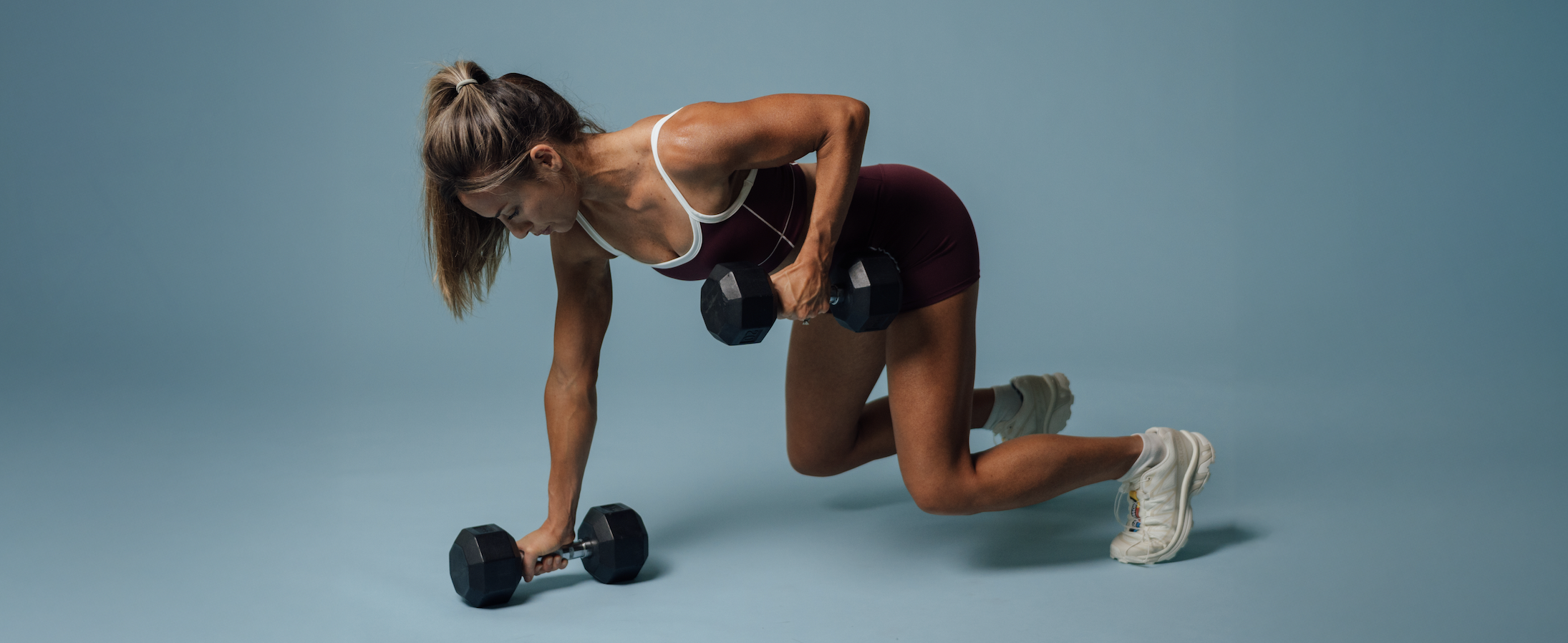
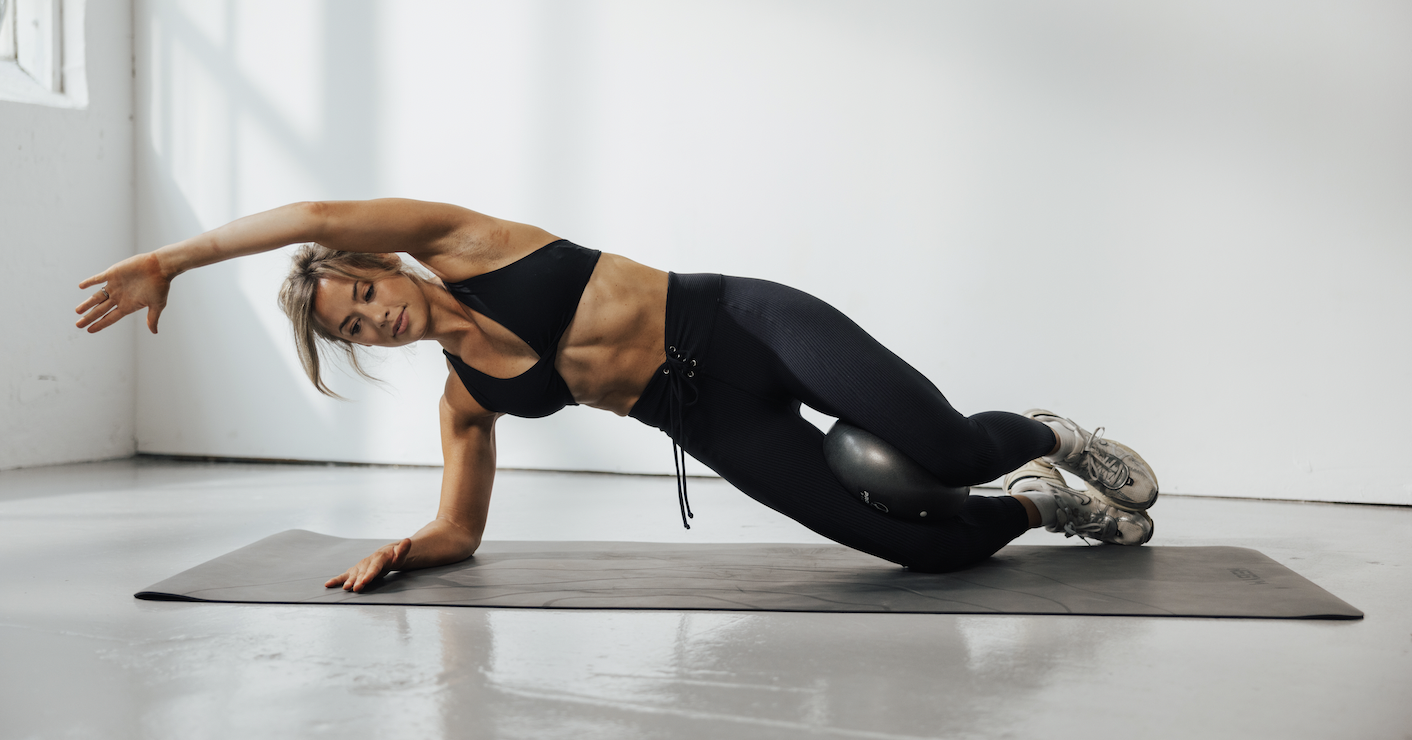
That reframe changes what training the pelvic floor should actually look like. Instead of isolating one muscle group, the more useful approach is training it inside the movement patterns it already shows up in: squatting, hinging, and rotating. Here's what that looks like in practice, along with how to safely build back toward impact instead of avoiding it indefinitely.
Start With Breath and Bracing
Before any pattern, there's a foundation worth understanding: breath and bracing. The pelvic floor lengthens on the inhale and recoils on the exhale, and how you manage that pressure shift shapes everything downstream.
"Breath and bracing play a central role in how the pelvic floor functions under load," Dr. Fincher explains. "The way we breathe and how we generate pressure through the abdominal wall directly influence the demands placed on the pelvic floor. Rather than simply 'tightening the core,' the goal is to create a coordinated strategy where the diaphragm, abdominal wall, and pelvic floor work together to manage pressure efficiently." Learn that coordination first, and the pelvic floor is better positioned to respond appropriately once you start loading it.
We asked Dr. Fincher what belongs in a well-rounded pelvic floor routine, and these three movement patterns rose to the top.
Pattern 1: The Squat
The squat trains the pelvic floor to coordinate with the diaphragm, deep core, hips, and ankles under vertical load. A goblet squat, a tempo squat with an exhale on the way up, or a split squat or step-up for a single-leg version all work. The point isn't the specific exercise, it's the vertical loading and the breath-pressure coordination happening underneath it.
Pattern 2: The Hip Hinge
Hinging — a kettlebell deadlift, a Romanian deadlift, a single-leg RDL for a position change — builds the glutes and hamstrings while teaching the pelvic floor to respond to shifting intra-abdominal pressure as the load moves through space. It's a different demand than the squat, and training it separately fills in a gap that squat-only programming leaves open.
Pattern 3: Contralateral Rotation
This pattern trains what's often called the sling systems: the posterior oblique sling (lat, thoracolumbar fascia, opposite glute) and the anterior oblique sling (obliques, adductors), which stabilize the pelvis during walking, running, carrying, and throwing. A half-kneeling chop and lift, a single-arm suitcase carry, or a contralateral loaded lunge all train this rotational stability that the other two patterns don't directly address.
Don’t Avoid Impact, Build Toward It
This is where a lot of pelvic floor guidance stops short — often recommending that women avoid running, jumping, and other high-impact movement indefinitely. Dr. Fincher pushes back on that as a long-term strategy.
“The pelvic floor is a group of muscles that are no different in their tissue composition than your glutes, hamstrings, or biceps — they respond to the load placed upon them,” she says. "If we never expose those tissues to the demands someone wants to return to, we don't give them the opportunity to build the capacity required for those activities. Permanent avoidance may reduce symptoms in the short term, but it often leaves the pelvic floor underprepared for real life." She adds that for many women, especially postpartum, reintroducing impact thoughtfully also supports bone density, muscle power, and fall prevention over the long run.
The key word is thoughtfully. “Progressing toward impact isn’t about jumping straight into running or high-level plyometrics — it's about gradually increasing the demands placed on the entire system," Dr. Fincher explains. In practice, that means building strength and control with bodyweight and loaded exercises first, then narrowing the base of support and adding single-leg work, increasing speed, and incorporating controlled eccentric movement — the kind that teaches the body to absorb force before it's asked to produce it.
Only then do low-level plyometrics, and eventually hopping, bounding, running, or jumping, enter the picture. "Every progression is individualized based on the person's symptoms, goals, and readiness," she notes.
That progression rail — add load, then change the base of support, then add speed and ground contact — can run underneath all three patterns above. Think: a pogo hop off the squat pattern, a single-leg hop off the hinge, a rotational medicine ball throw off the sling pattern. Same coordination principles, more demand.
Rebuilding Isn't Always Linear
Progress here doesn't always look linear, and it doesn't have to. Symptoms are also not a full diagnostic on their own. "Symptoms don't always tell you why something is happening," Dr. Fincher says. "An in-person assessment with an experienced pelvic floor physical therapist can be incredibly valuable because it helps identify the specific factors contributing to your symptoms rather than relying on guesswork."
Breathing mechanics, movement patterns, strength deficits, mobility limitations, pressure management, and tissue-specific concerns can all play a role, and understanding which one is actually driving your experience is what makes a plan effective instead of a guess. It's the same principle behind training the pelvic floor as a system in the first place: address the whole system, rather than spot-treating one symptom at a time.
If you're dealing with urinary leakage, vaginal pressure or heaviness, pelvic pain, difficulty coordinating your core, or pain with tampon insertion, pelvic exams, or intercourse, Dr. Fincher recommends seeing a pelvic floor physical therapist sooner rather than later — whether or not you've started a movement program yet. "These symptoms are common, but they aren't something you simply have to accept," she says.
The Programs Behind It
Dr. Fincher has worked directly on the pregnancy and postpartum programming inside Postpartum Moves, helping integrate the same pelvic health principles outlined here — breathing, pressure management, and movement capacity built together rather than in isolation. This deep core–pelvic floor connection is central to how every Moves program is built.
Dr. Fincher also completed the program herself. "I was really impressed by the program's progressive overload and thoughtful pacing," she says. "At the same time, because I was still experiencing symptoms, I repeated portions of the program before progressing — and that was exactly what my body needed." It's a detail she thinks more postpartum women should hear: "Rebuilding isn't always linear. Sometimes repeating a phase is part of the process, not a sign that you've failed. Giving yourself permission to progress at your own pace is often what leads to the best long-term outcomes."
Looking for a program built around these exact principles? Postpartum Moves trains patterns over isolation, and moves at your pace rather than a fixed timeline. It's designed in collaboration with a pelvic floor PT to help you rebuild strength and coordination the right way for your body.
None of this is limited to the postpartum window, either. Pelvic floor coordination matters at every life stage, for men and women alike, whether or not childbirth is part of the picture. Check out Core Moves for progressions from breathwork through advanced core and pelvic floor work, designed for any age or chapter.
Disclaimer: This article is for informational purposes and isn't a substitute for individualized care. If symptoms persist or worsen, see a pelvic floor physical therapist.