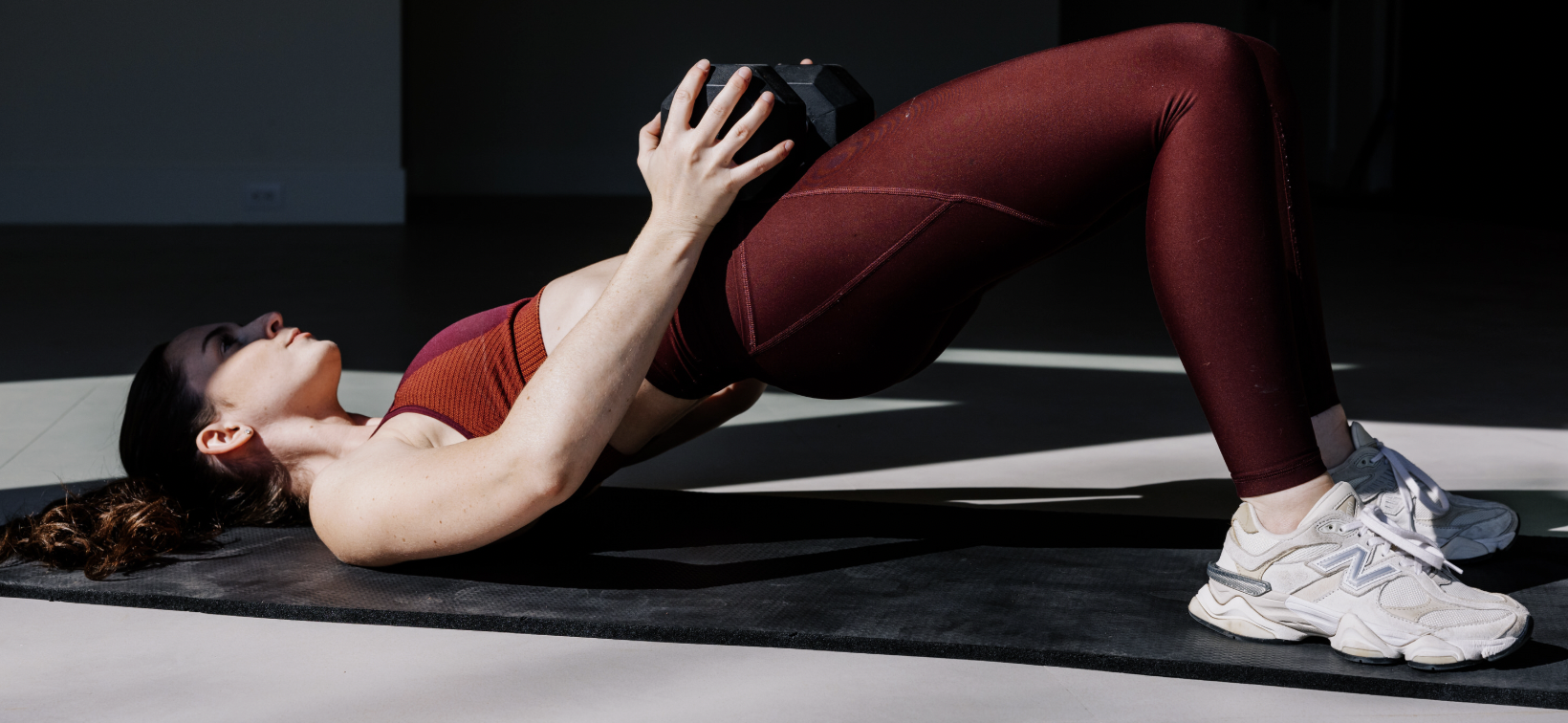
How Moves Supports Women Over 35
Something shifts after 35. You're training consistently, eating reasonably well, and the results aren't matching the effort the way they used to. That's not a motivation problem, it's physiology — and the good news is it's solvable once you know what's actually changing.
Here's what's happening in your body, why strength training is the most important thing you can do right now, and how Moves is built to support you through it.
What Changes After 35
Estrogen doesn't drop off a cliff at menopause. It starts declining gradually in your mid-30s, and those changes affect more than you might expect.
Muscle mass. As women age, research suggests they lose roughly 3–4% of muscle mass per decade (Mitchell et al., 2012). This decline can become more pronounced during the menopause transition, as falling estrogen levels may affect muscle maintenance and strength (Menzies et al., 2026). Less muscle can mean a slower metabolism, reduced strength, and more difficulty maintaining body composition, even when nothing else changes.
Bone density. Estrogen plays a key role in maintaining bone density by slowing the natural breakdown of bone tissue. As levels fall, bone loss accelerates — particularly in the years immediately around menopause (Finkelstein et al., 2008). In fact, women can lose up to 20% of their bone density in the 5–7 years following menopause, according to the Bone Health & Osteoporosis Foundation. Protecting bone density now is one of the most important long-term investments you can make.
Metabolism. Muscle is metabolically active tissue, meaning it burns calories even at rest. As muscle mass decreases, resting metabolic rate can decline with it (Wang et al., 2010). This is one reason body composition may shift with age, even when diet and exercise habits stay the same (Greendale et al., 2019).
Mood and energy. Estrogen helps regulate neurotransmitters like serotonin and dopamine, which influence mood and emotional well-being. During perimenopause, estrogen levels can fluctuate unpredictably, contributing to mood changes and sleep disturbances. Combined with symptoms like night sweats, these disruptions can leave you feeling fatigued — making it harder to train consistently and recover between workouts (Williams & Maki, 2025).
None of this is inevitable — and the research is clear on what moves the needle: progressive strength training and adequate protein.
Why Strength Training Is The Lever
If you're training for longevity and function in your late 30s and beyond, strength training is the highest-leverage thing you can do.
Here's what the evidence supports:
It preserves and builds muscle. Progressive overload — gradually increasing the challenge over time — signals the body to maintain and build muscle tissue. This directly counters the muscle loss that comes with aging and estrogen decline.
It protects bone density. Resistance training places mechanical stress on bone, which stimulates bone formation. Weight-bearing and resistance exercise are among the most effective interventions for maintaining bone health in women (Benedetti e t al., 2023).
It supports metabolic health. More muscle mass improves insulin sensitivity and supports healthy body composition over time. For women in their late 30s and 40s, this translates to more stable energy, better blood sugar regulation, and a body that responds more predictably to food and training.
It improves mood and cognitive function. Strength training has been shown to reduce symptoms of anxiety, depression, and irritability — common challenges during perimenopause (Han et al., 2024). This is partly driven by the same hormonal fluctuations that affect sleep and energy, which strength training helps stabilize over time.
It supports balance and reduces injury risk. Strength training improves coordination, joint stability, and balance — all of which become increasingly important as bone density decreases.
How Moves Trains You For This Stage
Moves is built specifically for women at this stage — the structure, the progressions, and the priorities are all oriented around what your body actually needs right now.
"Unfortunately there has been so much noise created for peri and postmenopausal women in an effort to market solutions that are more complex than needed and leave women more discouraged than helped,” says Madeline Custer, Moves Founder and Head Trainer. “If you are a peri or postmenopausal woman who wants to prioritize muscle and bone health, the programming in Moves App places a priority on all that's needed for you to do so."
Hypertrophy sessions. The foundation of Moves programming is strength training focused on building muscle — with progressive overload built in. You're not just repeating the same workout each week, the load and volume increase deliberately over time so your body keeps adapting.
Power and athletic movement. Strength is one thing. Power — the ability to generate force quickly — is something different, and it's the first quality to decline with age. Moves includes athletic performance work that trains explosive, reactive movement alongside traditional strength.
"While traditional strength training is absolutely vital for bone density, body composition, and mental health, explosive work takes the benefits a step further," says Dr. Brandon Moss, DPT. "It trains your body to handle force that comes on quickly, not just force applied slowly — and that matters because power fades faster with age than strength does."
"The ability to react quickly, catch yourself, and absorb sudden impact is often what keeps you active, capable, and injury-free for years to come," says Moss.
Mobility and core. Every training week includes sessions focused on flexibility, core stability, and joint health — not as an afterthought, but as a structural part of the programming.
Sprint intervals, in sensible doses. High-intensity interval training delivers real benefits for metabolic health and cardiovascular fitness. Moves includes sprint work in controlled doses, balanced against the recovery demands of strength training.
Choose your intensity. On conditioning days, you choose: High Intensity (sprint-style intervals) or Low Impact (mat-based mobility and core). Both count equally toward your week because some days your body needs to push, and some days it needs to recover.
"As you strengthen your core alongside limbs and ligaments you will have opportunity to do impact training and high intensity work at your comfort level, but it is not before you're ready or without swaps provided by Doctors of Physical Therapy to ensure you're supported every step of every workout," says Custer.
How Moves Handles Food
Training is one half of the equation. The other half is eating in a way that supports the work — and most women over 35 are undereating protein and often overcomplicating everything else.
"One of the biggest fueling mistakes I see women over 35 making is still approaching nutrition with a weight-loss-first mentality rather than eating to support muscle growth, performance, and recovery," says Courtney Rushing, MS, Nutritionist. “They're strength training, increasing their activity, and expecting their bodies to get stronger, yet they're still prioritizing calorie restriction year round. Building and preserving muscle requires adequate energy, protein, and carbohydrates to fuel training and recovery.”
There are two approaches to nutrition worth knowing, and you choose the one that fits your life.
Approach 1: Macro Counting. Tracking carbohydrates, fats, and protein gives you specific daily targets based on your goals — a Maintenance count for most of the year, and a Fat Loss count for intentional deficit phases. You'll track using a food scale and an app like MacrosFirst or MyFitnessPal.
Approach 2: Build Your Plate. For a more relaxed, intuitive approach, the plate method skips tracking entirely. Fill your plate: half non-starchy fruits and vegetables, a quarter protein, a quarter complex high-fiber carbohydrates, and healthy fats to round it out. It's built around balance and sustainability, not precision.
Moves+ members also get RD-recommended meal suggestions, a customizable planner, and a library of recipes to make it easier to follow through.
Maintenance or Fat Loss?
This is the most common question, and the answer depends on your body's signals and what you're currently asking of it.
"At some point, we have to shift the focus from constantly trying to eat less and weigh less to actually fueling our bodies to get stronger," says Rushing. "You can't expect your body to adapt to the work you're putting in if you're not giving it the resources to do so."
Choose maintenance when you're under stress, sleeping poorly, or recovering from a hard training block. Maintenance is your primary phase for most of the year — roughly 70–80% of the time. It's where you build muscle, restore hormones, support performance, and avoid metabolic adaptation.
Choose fat loss when you're sleeping well, energy is stable, and your biofeedback markers are strong. Fat loss phases are most effective in short bursts: 4–12 weeks at a time, no more than 8–24 weeks per year. A gentle deficit — not aggressive restriction — is what works here.
The goal is to time fat loss phases when your body has the resources to handle them, and spend the rest of your time building.
Protein targets. Aim for 1–1.2g of protein per pound of ideal body weight, meaning a healthy weight for your height, not a goal number or your lowest adult weight, Rushing notes. Spread it across meals: 30g or more per sitting gives your body what it needs for muscle protein synthesis.
Fiber. Aim for 25g or more daily, primarily from whole foods — not processed foods with added fiber. Fiber supports healthy estrogen metabolism and elimination, and it helps regulate hunger and energy across the day, says Rushing.
5 Habits To Leave Behind
The reality is, many women in this phase of life are still training and eating by rules that were written before the research caught up. A few worth leaving behind:
Skipping breakfast or training fasted. Eating before training gives your body fuel to work with. For women navigating hormone fluctuations, starting the day with food rather than skipping it can support energy and mood stability throughout the morning.
Eating 1,300 calories or less. "For most active women, consuming 1,300 calories or less per day is unlikely to provide enough energy to adequately fuel training, recovery, muscle preservation, and normal physiological function,” says Rushing. “Chronically underfueling can increase the risk of muscle loss, impaired recovery, and hormonal disturbances, particularly when paired with frequent or intense exercise.”
Avoiding carbs or fat entirely. Carbohydrates fuel your workouts. Fats support hormonal function. Cutting either entirely undercuts both — the goal is quality and proportion, not elimination.
Relying only on cardio. Cardio is valuable. But for women over 35, muscle mass is the lever — and cardio alone won't build or protect it.
Treating restriction as discipline. "When women remain in a calorie deficit for extended periods, the body adapts by reducing energy expenditure, changing appetite-regulating hormones, and sometimes decreasing spontaneous movement such as non-exercise activity (NEAT),” explains Rushing. “If energy availability becomes too low, hormonal function, recovery, and muscle preservation can also be compromised. This is why spending intentional time eating at maintenance and adequately fueling training is so important.”
Amy's Story
Amy came to Moves after years of cardio-heavy training and not seeing the results she wanted.
"I have dropped 20 pounds [since joining Moves] and I am in the best shape of my life at 47. I look better than I did in my 30s. I feel like a completely different person. The workout plan showed me the importance of weight training and building muscle and how it changes your body. The food plan showed me the importance of protein. The community is incredible. I could go on and on."
Stories like Amy’s are what Madeline hears most. "The most impactful DMs and reviews I see are of women claiming levels of strength and skills they did not have until later in life — women in their 50s unlocking pull-ups and skater squats reminds me how much of a gift aging on our terms truly is," says Custer.
Bring People With You
Training alongside other women makes the whole thing work better. The research on social support and exercise adherence is real — and having someone in it with you changes how you show up on the hard days.
Moves has a community built for exactly this: women training seriously, sharing what's working, and supporting each other through the parts that aren't. Whether you bring a friend or find one inside the app, you don't have to do this alone.
Start With Moves+
Moves+ takes care of the two decisions that derail most people: what to train and what to eat. Every week, both are handled. All that's left is to start.
If you're in your late 30s or 40s and ready to train in a way that's actually built for this stage, this is where to start.
This content is for informational purposes only and is not a substitute for professional medical advice, diagnosis, or treatment. Talk to your healthcare provider before making significant changes to your exercise or nutrition routine.